
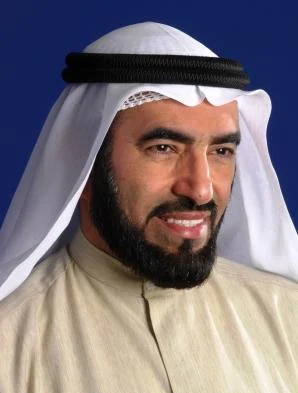
On 07 December, Kuwait’s Emir Sheikh Meshal Al Ahmad issued a decree rescinding the citizenship of Tareq Al Suwaidan, a high-profile Islamic preacher and one of the most recognisable public figures associated with the Muslim Brotherhood’s intellectual current in the Gulf. The government framed the action as a response to irregularities in his original naturalisation file, but the decision has drawn attention to Kuwait’s broader political trajectory. Suwaidan’s prominence, combined with the movement he is linked to, makes his case an indicator of a deeper shift: Kuwait is no longer operating within its former accommodationist approach to organised Islamist actors and is instead integrating nationality policy, political restructuring and security alignment into a single strategic direction.
His revocation comes at a moment of systemic change. Since May 2024, Kuwait has been undergoing its most significant political reconfiguration in decades, following the Emir’s suspension of parliament, concentration of legislative authority in the executive and initiation of a far-reaching review of national identity and citizenship. The Suwaidan decision therefore serves as both a symbolic and practical demonstration of how Kuwait’s new political order is taking shape, and why the country’s domestic evolution now matters for regional stability and for partners assessing Kuwait’s policy direction heading into 2026.
Kuwait’s political system has been defined for decades by a tension between an assertive parliament and a powerful ruling family. Parliamentary gridlock, ministerial grillings and repeated dissolutions produced motion but little movement. That ended abruptly on 10 May 2024, when Emir Sheikh Meshal Al Ahmad suspended the newly elected parliament, invoked emergency constitutional powers and announced a four-year period of constitutional revision. This is the third suspension since independence in the 1960’s, but it is the first to occur in a political environment where social media, new elites, factionalised tribes and Islamist networks all carry real weight.
The suspension has concentrated decision-making in the hands of the emir and cabinet and removed the main arena through which Kuwaitis have historically channelled political pressure. It has also shifted internal dynamics within the ruling family, reducing the influence of key branches and consolidating power more tightly around the emir. Since then, Kuwait has operated without its usual institutional checks, accelerating changes that would have been impossible under parliamentary oversight.
The citizenship review is part of this wider restructuring. More than 40,000 people have now been stripped of nationality across three categories: alleged forged family registries; women naturalised under Article 8; and cultural or public-figure naturalisations judged to have lacked a legal basis. The government is framing these measures as administrative corrections, but the scale and categories chosen show the campaign has political and strategic dimensions.
The most sensitive element is the targeting of foreign-born women who were naturalised through marriage to Kuwaiti men. Article 8 naturalisations have existed since 1959 and were tightened in 1987, with further scrutiny after the 1991 liberation. Many of the women now losing citizenship have lived in Kuwait for decades and relinquished their original nationality, leaving them effectively stateless. The removal of this category at scale would have been politically impossible with a functioning parliament. Its expansion signals a state-led attempt to redraw the boundaries of the citizen body and reinforce a more restrictive definition of national identity.
Suwaidan’s case sits at the intersection of these domestic shifts and a changing regional posture toward the Muslim Brotherhood. The Brotherhood is designated as a terrorist organisation in Saudi Arabia, the UAE and Egypt, and several European states have tightened their scrutiny of Brotherhood-affiliated networks due to concerns about foreign influence and community-level radicalisation. The United States has recently begun formal procedures to assess specific Brotherhood chapters for possible terrorist designation, marking a notable departure from past engagement approaches.
For decades, Kuwait’s parliament was shaped by a society that grew steadily more diverse. As the franchise expanded and new social groups gained the right to vote, the legislature became an arena where Islamists, liberals, tribal blocs and urban notables all competed for influence. The ruling family often managed this complexity by reaching out to emerging constituencies as others became more demanding. This environment made Kuwait the Gulf outlier that not only allowed but integrated Brotherhood-aligned actors through its Islamic Constitutional Movement, giving Islamist politics a degree of formal participation unseen elsewhere in the region.
That landscape has now shifted decisively. Kuwait is aligning with a broader regional and Western trend that treats the Muslim Brotherhood and its networks as political challengers rather than legitimate parliamentary actors. The move against Suwaidan signals that organised Islamist currents no longer fit within the state’s emerging political order or its redefined citizenship framework. It also sends a clear message to domestic actors: the space for ideological pluralism that once characterised Kuwait’s parliamentary era has narrowed sharply under the new political configuration.
Three strategic pressures explain why Kuwait is shifting now. First, the leadership wants to push through structural reforms that were repeatedly blocked by parliamentary politics. These include fiscal consolidation, debt legislation and state-sector restructuring. With parliament suspended, reforms can move without obstruction. Second, Kuwait is aligning with a regional security consensus that treats transnational political Islam as a destabilising force. The Suwaidan decision shows Kuwait is no longer prepared to be the outlier within the GCC on this issue. Third, the identity review is part of a broader recalibration of legitimacy. Kuwait is defining a smaller, more tightly bounded citizen body and linking national belonging more closely to loyalty, lineage and alignment with the state’s priorities.
Kuwait’s political direction remains unsettled. The emir has consolidated power, but he has not set out a clear roadmap for constitutional reform or a timeframe for restoring parliament. The current approach risks generating a legitimacy gap if economic performance does not improve, and public dissatisfaction with citizenship withdrawals is growing across ideological lines. The most plausible scenario in 2026 is a managed reinstatement of parliamentary life under tighter constitutional constraints, combined with continued identity-based controls and heightened scrutiny of ideological networks. A sustained move toward full autocratisation is possible but remains unlikely without internal consensus within the ruling family, which does not yet exist.
Kuwait enters 2026 more centralised and more controlled, but also more politically brittle. The Suwaidan case crystallises the shift: the space for organised ideological currents is shrinking, national identity is being recast, and the traditional Kuwaiti political bargain is being rewritten in real time.